Key Takeaways
- Myopia happens when the eye grows longer, and that length change stays.
- Glasses, contacts, and LASIK sharpen sight, but they don’t shorten the eye.
- Myopia control can slow how fast a child’s prescription climbs.
- Ortho-k, soft multifocal daily lenses, low-dose atropine drops, and specialty myopia control glasses are options worth discussing.
- Two hours outdoors on many days and screen breaks support healthier eyes.
What Myopia Really Means for Your Vision
Your child hands back the restaurant menu because the specials board across the room looks like a smudge. That’s usually the moment parents start searching for answers, and the team at Elite Vision Consultants hears the question often.
Myopia, or nearsightedness, can’t be reversed because the eye stays at its longer length, but the speed it progresses can often be slowed with the right plan.
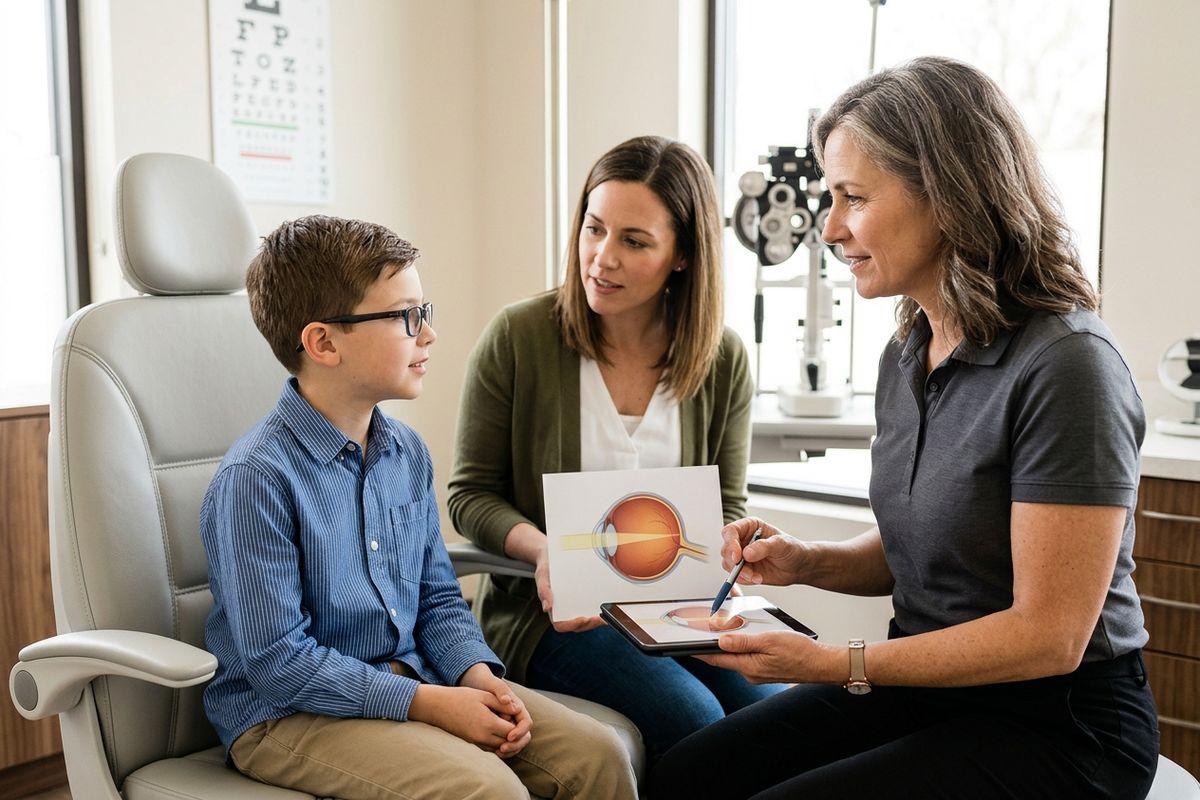
Myopia shows up when the eye grows a bit too long from front to back, or the cornea curves more sharply than it should. Light lands just short of the retina instead of right on it, so faraway things blur while a book six inches from the nose stays crisp. It commonly begins in early childhood and can keep progressing into the mid-twenties, right when the body is doing a lot of growing.
Signs to Watch for in Kids
Kids rarely announce blurry vision. They adapt instead.
- Squinting at the classroom board or the TV across the living room
- Tired or achy eyes after a long school day
- Scooting closer and closer to screens
- Skipping activities like baseball where distance matters
If you spot these signs, a children’s eye exam is the best first step.
Why Myopia Shows Up More Often Now
Homework moved onto tablets, and free time moved onto phones. All that close-up focusing keeps the eyes locked at one short distance for hours, which can also contribute to digital eye strain.
Daylight matters, too. Time outdoors seems to help slow eye growth, and many kids get far less of it than they used to. Family history adds another layer, so if you or your partner wear glasses for distance, your child has a higher chance of needing them.
The Short Answer on Reversal
Once an eye grows longer, it stays that length. Nothing you buy online, no eye exercise routine, and no vitamin can shrink it back.
Glasses and contacts bend light so the picture lands correctly on the retina. They give clear vision, though they leave the shape of the eye exactly as it is. LASIK works differently by reshaping the cornea, which can reduce the need for glasses, but the eye itself remains elongated underneath.
Why Slower Progression Still Matters
Here’s the part worth your attention. A longer eye means stretched tissue at the back, and stretched tissue raises the long-term chance of glaucoma, earlier cataracts, and retinal changes such as tears or detachment.
A child who finishes growing at a mild prescription carries less of that risk than one who lands at a strong prescription. Every step of slowing counts toward a smaller number in adulthood.
Myopia Control Options You Can Explore
Ortho-K Overnight Lenses
Your child sleeps in a firm lens, then pops it out at breakfast. The cornea holds a gently reshaped curve through the day, so swim practice and soccer happen with no glasses sliding down a nose. Ortho-k can help slow eye lengthening in growing kids.
Soft Daily Lenses Like MiSight
Soft multifocal daily contact lenses carry more than one prescription in a single lens to keep vision clear at every distance while slowing progression. A fresh lens goes in each morning and gets tossed each night, which keeps care simple and cuts down on cleaning routines. Many kids pick up insertion faster than parents expect.
Low-Dose Atropine Drops and Specialty Glasses
Some families prefer one small drop at bedtime. Low-dose atropine can help slow progression while your child sleeps, with no daytime routine at all.
There are also lens designs built specifically to slow progression rather than just sharpen distance vision. They look like regular glasses to classmates.
Daily Habits That Support Healthier Eyes
Aim for about two hours outdoors on many days. Bike rides, park trips, and walking the dog after school all count. Pair that with regular screen breaks, and you give growing eyes the kind of variety they thrive on.
Talk to Elite Vision Consultants About Your Child’s Myopia
Myopia can’t be undone, but slowing it down is well within reach, and the earlier you start, the more it pays off. If you’ve noticed your child squinting, scooting closer to screens, or straining after school, book a myopia control consultation with Elite Vision Consultants in Crown Point or Cedar Lake. We’ll walk you through the options and build a plan that fits your child.